Look beyond the visible texture
Planned work may contact popcorn texture, joint compound, plaster, patching, adhesive, or another layer. Each suspect material in the work scope needs to be addressed.
FREE SOUTH CAROLINA HOMEOWNER GUIDE
A clear, safety-first guide to testing, project scope, removal, repairs, finishing, cost, and timing for homeowners across Lexington, Columbia, and the Midlands.
No signup required. Open the PDF on your phone, save it, or share it with another homeowner.
 FREE GUIDESafety before scraping.
Five practical decisions that protect the people and the project.
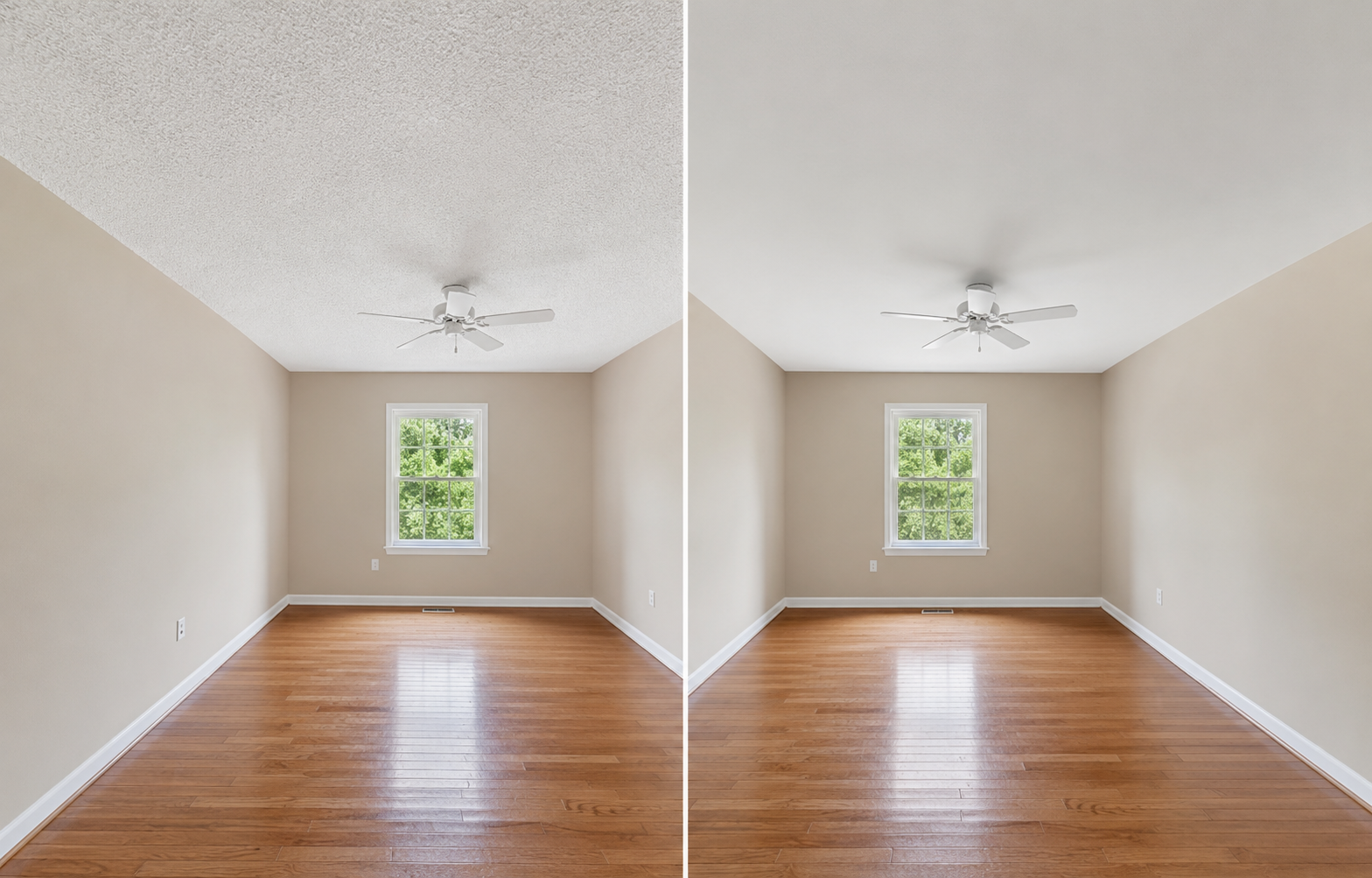 BEFOREAFTER
THE 60-SECOND VERSION
Popcorn ceiling removal is not simply a matter of wetting texture and scraping it down. Before material is disturbed, the planned work needs a clearly defined scope and the suspect materials in that scope need to be addressed.
After the correct removal path is known, protection, repairs, smoothing, primer, paint, cleanup, and the final walkthrough all contribute to the result you see overhead.
SAFETY BEFORE SCRAPING
You cannot confirm what a ceiling contains by looking at it or relying only on the home's construction date. South Carolina DES identifies popcorn ceiling texture and joint compound among materials that may contain asbestos and explains that age affects likelihood, not certainty.
SCOPE MATTERS
A useful inspection is tied to the rooms, materials, and layers the actual project may disturb. It is not automatically a whole-home survey.
Planned work may contact popcorn texture, joint compound, plaster, patching, adhesive, or another layer. Each suspect material in the work scope needs to be addressed.
A licensed inspector evaluates materials that are uniform in appearance and applies representative sampling procedures to the applicable areas.
The report should document the inspected scope, materials, sample locations, laboratory results, and important limitations.
USE THE RIGHT TEAM
A positive result does not mean the goal is over. It means the project needs a different team, controls, schedule, and release process.
THINK BEYOND SCRAPING
Scraping is only one stage. The quality of the finished room depends on protection, repairs, smoothing, coating, cleanup, and a clear final walkthrough.
PLAN THE REAL SCOPE
Square footage matters, but it is only one part of the estimate. Access, ceiling condition, protection, laboratory timing, repairs, and the removal path can all change the plan.
KEEP THE CHECKLIST
The seven-page PDF includes the full five-point guide, a quick decision checklist, official homeowner resources, and direct links to contact Bye-Bye Popcorn.
OFFICIAL HOMEOWNER RESOURCES
READY TO LOOK UP AND LOVE IT?
Tell us which rooms you want transformed. Required inspection and testing are scheduled and priced separately before ceiling material is disturbed.